

190 Sympathy Messages: Beautiful Things to Say When Someone Dies
When someone we care about loses a person they love, most of us find ourselves standing at the edge of language — reaching for words that feel big enough for the moment and coming up empty. Loss is one of the few human experiences that genuinely defies easy expression. And yet, showing up with words — imperfect, sincere, human words — matters more than most of us realize.
A simple, heartfelt sympathy message can remind a grieving person that they are not alone in the darkness. That someone saw what happened and was moved by it. That love doesn’t vanish when a person does. This collection of 190+ sympathy messages covers every scenario — from what to write in a card to what to say at the graveside, from letters to flowers to emails. These are words for the people we love, for the moments when saying nothing feels wrong but saying the wrong thing feels worse. 🕊️💛
You can read Wednesday Morning Prayers And Blessings: Simple Words To Start Your Day Right.
Beautiful Things to Say When Someone Dies 🕊️
These sympathy messages are for the moments when words feel impossible, but silence feels wrong — genuine, warm, and human.

- 🕊️ I’m so deeply sorry for your loss. There are no words big enough for what you’re going through, but I want you to know I’m here.
- 💛 They were one of the good ones — the kind of person the world doesn’t make enough of. I’m so glad I knew them.
- 🕊️ You don’t have to have it together right now. Grief has no timeline and you are allowed to feel everything you’re feeling.
- 💛 Losing someone you love is one of the hardest things a person can go through. I’m holding you in my heart through every hard moment of it.
- 🕊️ There is nothing I can say to make this better, but I want you to know I’m not going anywhere.
- 💛 The love you had for them was real and beautiful. That doesn’t disappear — it just changes shape.
- 🕊️ I keep thinking about them and about you, and I just wanted to say — I’m so sorry. They mattered to so many people.
- 💛 May the memories of their life bring you comfort when the weight of their absence feels too heavy.
- 🕊️ You were loved by someone extraordinary. And that extraordinary person was loved deeply by you. That’s a beautiful thing, even now.
- 💛 I’m not sure what to say — but I know I want you to know I care about you and I’m here for whatever you need.
- 🕊️ Grief is love with nowhere to go. May you find places to put it — in memories, in stories, in the people who knew them too.
- 💛 The world feels different when someone you love is no longer in it. I’m so sorry your world changed today.
- 🕊️ They left an impression on everyone they met. That kind of person doesn’t really leave — they just take up a different kind of space.
- 💛 I’m thinking of you today and every day as you navigate something no one should have to navigate alone.
- 🕊️ Your grief is not a burden to those who love you. Please let us carry some of it with you.
What to Write in a Sympathy Card 💌
These sympathy messages are specifically crafted for cards — brief, genuine, and meaningful enough to be read more than once.
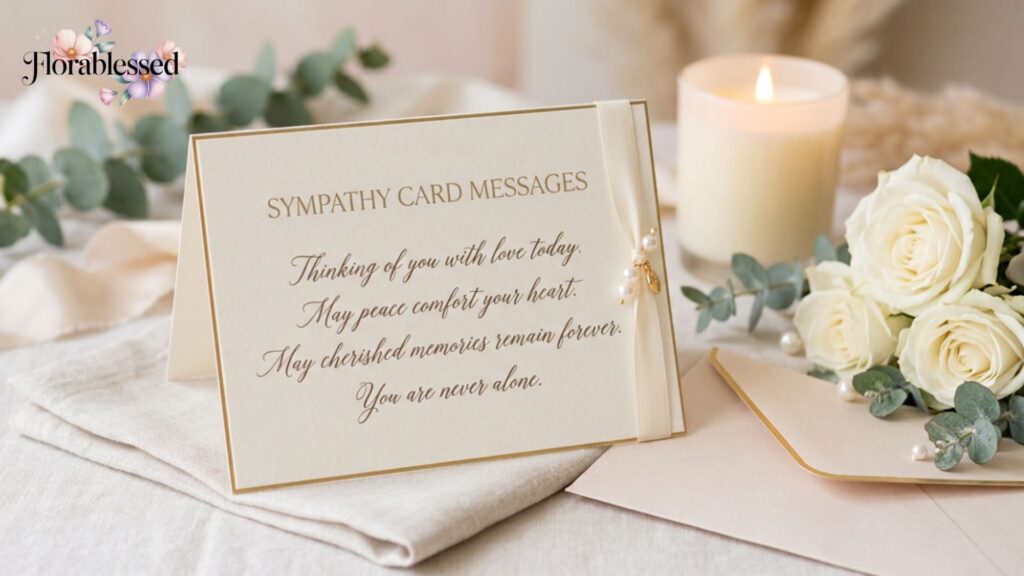
- 💌 With heartfelt sympathy on the loss of your [mother/father/friend/etc.]. May the love of those around you comfort you during this difficult time.
- 🕊️ There are no perfect words for a moment like this — only the sincere wish that you find peace amid the pain.
- 💛 Sending you strength, love, and the warmest thoughts as you grieve. You are not alone.
- 💌 May the memories you carry of [name] bring you more comfort than sorrow with each passing day.
- 🕊️ I’m so sorry for your loss. [Name] was an incredible person and the world is lesser for their absence.
- 💛 Words don’t feel like enough, but please know my heart is with you in this loss.
- 💌 May you find moments of peace in between the grief, and may those moments grow wider with time.
- 🕊️ Thinking of you and your family with great love and sympathy during this tender time.
- 💛 [Name] was so loved, and that love doesn’t end at a life’s conclusion. It continues in every person they touched.
- 💌 Please know that you and your family are in my thoughts and prayers today and in the difficult days ahead.
- 🕊️ A life so well-lived leaves an impression that time cannot erase. [Name]’s memory will be a blessing.
- 💛 My deepest condolences to you and your family. May the love that surrounds you be your strength.
- 💌 I’m so sorry. There’s nothing more I can say but that — I’m so deeply, genuinely sorry.
- 🕊️ May the peace of knowing how deeply they were loved bring some comfort to you today.
- 💛 Wishing you gentle days and the presence of people who love you as you grieve. I am one of those people. 💌
Messages to Avoid in a Sympathy Card ⚠️
Before you write, it’s equally important to know what not to say. These well-meaning phrases often cause more pain than comfort — and understanding why helps you choose more honest and helpful words instead.
Avoid these phrases:
- ⚠️ “Everything happens for a reason.” — This invalidates someone’s grief and presumes to explain a loss that has no adequate explanation.
- ⚠️ “They’re in a better place.” — Even if you believe this deeply, the person grieving may not be ready to hear it, and it can feel dismissive of their pain.
- ⚠️ “I know exactly how you feel.” — You don’t. Every grief is specific to its relationship and its person. Comparison minimizes the uniqueness of their loss.
- ⚠️ “At least they lived a long life.” — Length of life doesn’t soften the pain of losing someone, and “at least” phrases suggest the griever should already be moving toward gratitude.
- ⚠️ “Let me know if you need anything.” — This is often genuine, but it puts the burden on the grieving person to ask. Better to show up with a specific offer.
- ⚠️ “Stay strong.” — This implies that showing emotion is weakness. Grief is not weakness. It’s love.
- ⚠️ “It was God’s plan.” — Unless you know deeply that the grieving person shares this belief and will receive it that way, avoid it. It can feel like God has been assigned blame.
- ⚠️ “Time heals everything.” — While time does help, this minimizes immediate pain and suggests they should simply wait it out.
- ⚠️ “I heard it was very sudden.” — This can feel intrusive, as if you’re more curious than compassionate.
- ⚠️ “You’ll feel better soon.” — You don’t know that, and hearing it can feel like pressure to grieve on a timeline.
What to do instead: Say something honest and simple. “I don’t know what to say, but I’m here.” That alone is enough.
What to Write in a Condolence Letter 📝
A condolence letter is longer and more personal than a card. These sympathy messages work as letter starters or can be expanded into full paragraphs for someone you know well.
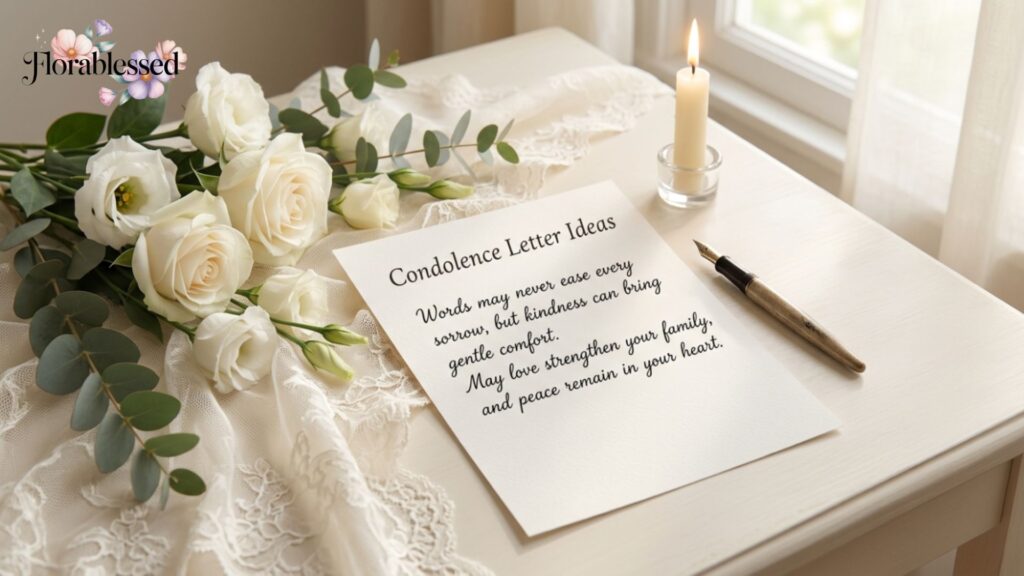
- 📝 I’ve been thinking about you constantly since I heard the news, and I wanted to write to you because a text felt like too little for a loss this significant.
- 🕊️ [Name] was someone who made every room they entered a little brighter. I know that’s not just my experience — everyone who met them felt it.
- 💛 I want you to know that your family is in my heart during what I can only imagine is the hardest season of your life.
- 📝 Please don’t feel any pressure to respond to this letter. It’s written simply to let you know that you are not alone in your grief.
- 🕊️ I remember [specific memory of the deceased] and I think about that often. The way they [did something kind/said something meaningful] stays with me.
- 💛 If there’s anything I can do — bring a meal, help with the children, sit with you in the quiet — please say the word and I will be there.
- 📝 Grief doesn’t follow a schedule. Please permit yourself to feel it fully, without apology, for as long as you need to.
- 🕊️ Your loss is deeply felt not just by your family but by everyone whose life [name] touched. That is a testament to the remarkable person they were.
- 💛 I’ve been crying on and off since I heard, which I think means they mattered more than I even had words for while they were here.
- 📝 You don’t have to be strong for anyone right now. Not for me, not for anyone. Just be in the grief and let people carry some of the weight.
- 🕊️ I love you. I loved them. And I want you to know that this loss is mourned by everyone who knew and loved your family.
- 💛 Write to me when you’re ready. Or don’t. I’ll keep showing up either way.
- 📝 May you feel the warmth of the love surrounding you in the weeks and months ahead — the love of friends, family, and a God who sees every tear.
- 🕊️ I’ll be thinking of you on the ordinary days too — not just the anniversaries, not just the holidays, but the random Tuesday afternoons that sneak up with grief.
- 💛 Take all the time you need. There is no right way to grieve. There is only your way — and you are allowed to take it. 📝
What to Say in a Condolence Email 📧
When distance or circumstance means you can’t be there in person, a condolence email can still carry real warmth. These sympathy messages are appropriate for professional connections, distant relationships, or anyone where an email is the most fitting medium.

- 📧 I was deeply saddened to hear of the passing of [name]. Please accept my sincere condolences to you and your family.
- 🕊️ I wanted to reach out to let you know I’m thinking of you during what must be an incredibly difficult time.
- 💛 [Name] was someone I always admired. Please know that their loss is felt beyond your family circle.
- 📧 I won’t pretend words are adequate for a moment like this — but I do want you to know that your family is in my thoughts.
- 🕊️ If there’s any way I can support you — even from a distance — please don’t hesitate to reach out. I mean that genuinely.
- 💛 I’ve been holding you in my heart since I heard the news. Please know you have people thinking of you, even those far away.
- 📧 [Name]’s contributions to [workplace/community/family] will not be forgotten. They made a lasting impression on everyone who crossed their path.
- 🕊️ I know this is a season of enormous grief. Please take all the time you need — nothing here is more important than your wellbeing.
- 💛 My deepest sympathies on your loss. I hope the love of those around you can bring you some measure of peace.
- 📧 Please don’t feel any obligation to respond. This is simply to say: I’m sorry, I care, and I’m thinking of you.
- 🕊️ If there’s anything I can do to lighten the load — anything at all — please let me know.
- 💛 [Name] was a wonderful person and the impact they had on everyone who knew them is irreplaceable.
- 📧 You and your family are in my thoughts and prayers. May you find moments of peace during this incredibly hard time.
- 🕊️ I’m so sorry for your loss. Please take good care of yourself during these difficult days.
- 💛 With sincere sympathy and warm regards — please know you are not facing this alone. 📧
What to Write on Funeral Flowers 🌸
Flower messages are brief by nature — but they still carry weight. These sympathy messages for funeral flowers are short, sincere, and appropriate for a range of relationships.
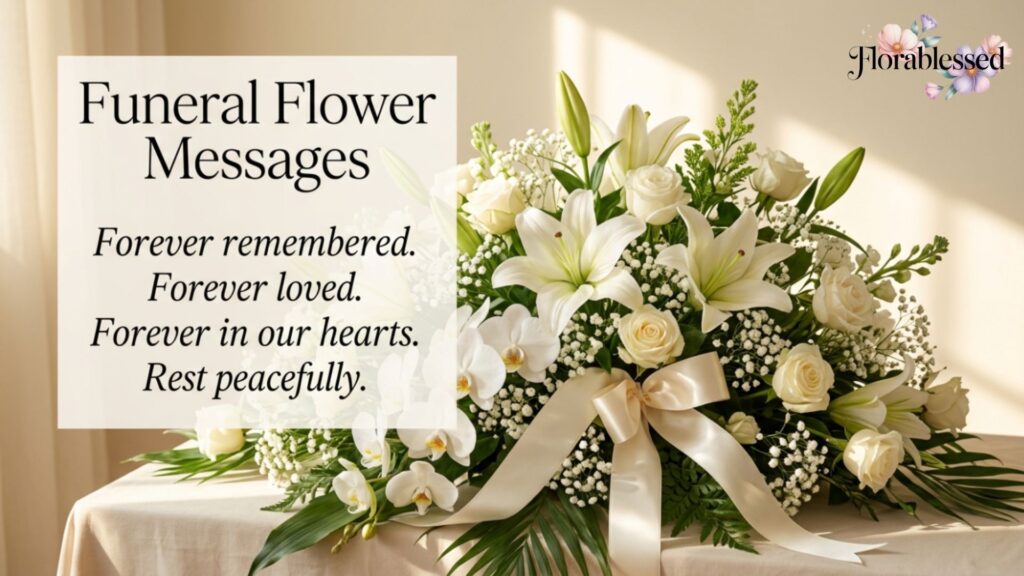
- 🌸 With love and deepest sympathy — you are in our hearts.
- 🕊️ In memory of a life beautifully lived. Rest in peace, [name].
- 💛 We will always remember them — with love.
- 🌸 Our hearts are with your family. With deepest condolences.
- 🕊️ Forever in our hearts and never forgotten.
- 💛 With love, gratitude, and the deepest respect for a remarkable life.
- 🌸 In loving memory. May they rest in the peace they deserved.
- 🕊️ These flowers represent the love we carry for them and for you.
- 💛 With sympathy and the warmest love to the family.
- 🌸 A beautiful soul, a lasting legacy, and a love that lives on.
- 🕊️ Rest peacefully, [name]. You were loved beyond measure.
- 💛 In memory of someone the world was better for having.
- 🌸 Our deepest sympathies — we grieve alongside you.
- 🕊️ Wishing you peace and comfort during this time of loss. With heartfelt condolences.
- 💛 Gone from our sight, but never from our hearts. With love. 🌸
What to Say at the Funeral 🕊️
Speaking at a funeral — whether as a eulogist, a friend paying respects, or someone greeting the family — requires words that honor the moment. These sympathy messages work as spoken words.

- 🕊️ I’ve been thinking about what to say for days, and honestly, the truest thing I can offer is this: [name] mattered to me in ways I’m still discovering.
- 💛 They had a way of making you feel like the most important person in the room. I’ve never met another person who could do that so effortlessly.
- 🕊️ I keep expecting them to call. To walk in. That says everything about the size of their presence in my life.
- 💛 What I’ll remember most is [a specific memory] — and I’ll carry that with me for the rest of my life.
- 🕊️ [Name] was not just loved — they were the kind of person who made love look easy. They made everyone around them better at it.
- 💛 I don’t want to talk about death today. I want to talk about the way they laughed. The way they showed up. The way they loved. Because that’s what endures.
- 🕊️ If they taught us one thing, it’s [a quality or lesson the deceased embodied]. May we all carry that forward.
- 💛 To the family: you were loved by one of the most extraordinary people I have ever known. That is your inheritance.
- 🕊️ Grief this deep is proof of love this real. The two things are inseparable.
- 💛 I believe they are at peace. And I believe that the love they left behind — in this room, in these people — is as real and alive as they ever were.
- 🕊️ Thank you for sharing them with the rest of us. You didn’t have to, and we are all richer for it.
- 💛 I’m going to miss them in the ordinary moments most — and I think that’s exactly how they would have wanted to be missed.
- 🕊️ They were one of those rare people who made the world feel more possible just by being in it.
- 💛 What they started in this world doesn’t end today. It continues in every life they touched.
- 🕊️ I loved them. I will always love them. And I am so grateful to be here with all of you who loved them too. 🕊️
Bereavement Support and Resources 💙
Grief doesn’t end after the funeral. These sympathy messages and notes are for the days, weeks, and months that follow — and they come alongside practical guidance for finding genuine support.
Messages for the days after the funeral:
- 💙 I know the funeral is over, but your grief isn’t. I’m still here — more so, actually. This is when you need people the most.
- 🕊️ It’s been [two weeks / a month] since we lost [name]. I’ve been thinking about you, and I want you to know I haven’t forgotten.
- 💛 The casseroles will stop coming and the visitors will get fewer. I want you to know I’m still showing up even when everyone else has moved on.
- 💙 Grief doesn’t follow a six-week schedule. Please reach out whenever you need to — a month from now, a year from now. I’m here.
- 🕊️ I’m dropping off [a meal/flowers/something they mentioned loving]. You don’t have to talk. I just want you to know people are still thinking of you.
Bereavement resources to consider:
- Grief counseling: Many therapists specialize in grief and loss. Individual therapy can provide a safe, consistent space for processing.
- Support groups: Organizations like GriefShare, The Compassionate Friends (for loss of a child), or local hospice bereavement programs offer peer support.
- Crisis lines: If grief becomes overwhelming, the 988 Suicide and Crisis Lifeline (call or text 988 in the US) provides immediate support.
- Books on grief: Option B by Sheryl Sandberg, A Grief Observed by C.S. Lewis, and The Year of Magical Thinking by Joan Didion are often cited as deeply helpful.
- Online communities: Reddit’s r/grief and other online forums offer community with others who are walking similar paths.
- Grief journals: Writing through grief is one of the most effective coping tools available — guided journals or blank notebooks both work.
If you are supporting a grieving person, the most important resource is simply your consistent, unhurried presence.
Sympathy Messages for Specific Losses 💙
Different losses call for slightly different words. These sympathy messages are tailored to specific relationships and circumstances.
Loss of a parent:
- 💙 Losing a parent is losing the person who knew you from the very beginning. That grief is enormous. I’m so sorry.
- 🕊️ No one else in the world loved you the way a parent does. That loss is unlike any other, and I want you to know I understand that.
- 💛 Your mother/father was someone who raised a remarkable person. I see their influence in you every day.
Loss of a child:
- 💙 There are no words for the loss of a child. None. I am so unspeakably sorry, and I am here for as long as you need me.
- 🕊️ Your child was loved deeply. May that love, imperfect and insufficient as it feels right now, be something you can return to.
- 💛 Nothing you did caused this. Nothing could have prevented it. You were a wonderful parent.
Loss of a spouse or partner:
- 💙 Losing your life partner is losing the person who knew your whole life alongside you. That is a grief I can barely imagine, and I’m here for you.
- 🕊️ The life you built together was real and beautiful. That doesn’t disappear — it lives in you.
- 💛 You don’t have to navigate this alone. Please lean on the people who love you.
Loss of a friend:
- 💙 Losing a best friend is losing a person who chose you. That kind of love is irreplaceable.
- 🕊️ Friends are the family we build ourselves. The loss of yours is a loss of something very specific and precious.
Sudden or unexpected loss:
- 💙 When loss comes without warning, there is no preparation — only the shock of absence. I’m so deeply sorry.
- 🕊️ Sudden loss leaves no time for goodbye. May you find peace knowing that love doesn’t need a goodbye to be complete.
How to Support Someone Who Is Grieving Long-Term💛
Most people don’t know what to do after the first two weeks of someone’s grief. These sympathy messages and practical notes are for being a consistent presence through the long journey of loss.
What to say in the weeks and months after the loss:
- 💛 I know it’s been a few months, but grief doesn’t have an expiration date. I’m still thinking of you. I still care.
- 🕊️ I saw something today that reminded me of [name], and I wanted to share it with you — because I thought you might like to know they’re still present in my mind.
- 💙 The first holidays without someone are brutal. I’m thinking of you especially this [holiday/season/birthday].
- 💛 You don’t have to perform “getting better” for anyone. Grieve in whatever way is honest for you.
- 🕊️ I won’t stop mentioning [name]’s name unless you ask me to. Hearing their name keeps them alive in conversation, and I think that matters.
Practical things you can do for a grieving person:
- 💙 Bring meals with no expectation of conversation or reciprocation.
- 🕊️ Offer to handle a specific practical task — grocery shopping, paperwork, childcare, yard work.
- 💛 Simply sit with them in silence. Your presence is more powerful than your words.
- 💙 Mark their loss dates in your calendar — anniversaries, birthdays, the day of the death — and reach out on those days specifically.
- 🕊️ Ask about the person who died. Say their name. Ask what they were like. This is one of the greatest gifts you can give a grieving person.
- 💛 Check in repeatedly, even when you don’t hear back. The ones who keep reaching out are remembered as the ones who truly loved.
- 💙 Don’t try to fix the grief. Just witness it. That’s enough.
FAQs
Q1: What is the most important thing to remember when sending a sympathy message?
Sincerity matters far more than eloquence. The grieving person is not looking for perfect words — they’re looking for genuine human connection. A simple, honest message sent with a full heart will always land better than a beautifully written note that feels borrowed or impersonal.
Q2: Is it too late to send a sympathy message weeks after someone’s death?
It is never too late. In fact, messages sent weeks or months after a loss often mean more than those sent immediately, because most support dries up after the funeral. A message that acknowledges someone’s continued grief long after the public mourning period has ended shows real, sustained love.
Q3: What if I didn’t know the deceased very well?
Focus on the person you do know — the one who is grieving. You don’t need to have known the deceased deeply to offer meaningful condolences. “I may not have known them well, but I know how much they meant to you, and I’m so sorry for what you’re going through” is both honest and caring.
Q4: Can I write about a specific memory of the deceased in a sympathy message?
Absolutely — this is often the most precious thing you can offer. Sharing a specific memory tells the grieving family that someone else carries their loved one in their heart. These small stories are often read repeatedly and treasured deeply.
Q5: Should I mention religious beliefs in a sympathy message?
Only if you’re certain the grieving person shares those beliefs and will receive them comfortably. Well-meaning religious phrases can sometimes feel alienating or dismissive to people who are angry at God, who don’t share your faith, or who simply aren’t ready to receive that kind of comfort yet.
Q6: How do I write a sympathy message for a death by suicide?
Treat the grief with the same tenderness as any other loss — without additional labels, judgments, or implied questions about why. The family is already carrying immense pain. Focus on the person’s life, not the manner of their death. “I’m so sorry for your loss. [Name] was someone I cared about deeply, and I’m here for you” is enough.
Q7: Is it appropriate to use humor in a sympathy message?
Only if you knew the deceased personally and humor was part of your shared relationship, and only after leading with genuine condolence. A light, fond memory that captures someone’s spirit can be beautiful — but humor should never be used to minimize or deflect from the real weight of the loss.
Conclusion 🕊️
Loss is one of the few universal human experiences — and yet every grief is completely specific and deeply personal. No sympathy message erases the pain of absence. But some words remind a grieving person they are not alone. That the person they lost mattered beyond their own walls. That love, even in the language of condolence, is still love.
Every message in this collection was written with that intention: not to fix grief but to accompany it. Not to offer answers but to offer presence. Not to say the perfect thing but to say the real thing.
If you’ve been searching for words for someone you love who is hurting — you’ve found them. Now send them. Show up. Say the person’s name. Keep checking in when everyone else has moved on.
That is how we honor the dead. That is how we love the living.
To everyone navigating loss right now — you are seen, you are not alone, and the people around you want to help. Let them. And to everyone reaching out to someone in grief — the fact that you’re looking for the right words is already proof that your love is real. 🕊️💛
You can read more messages from legendurn.

Assalamu Alaikum! I’m Sophia, a passionate writer who loves sharing blessings, heartfelt wishes, inspiring quotes, and positive words that brighten everyday life. Through this blog, I hope to spread kindness, faith, happiness, and reminders that touch the heart.
I enjoy creating meaningful content that helps people celebrate special moments, strengthen relationships, and appreciate life’s little blessings. My goal is to make this space warm, uplifting, and full of positivity for every reader.
When I’m not writing, I love reading, journaling, enjoying cozy coffee moments, and finding beauty in simple things. Thank you for being here and supporting this journey. May your life always be filled with peace, joy, and countless blessings. 💖